
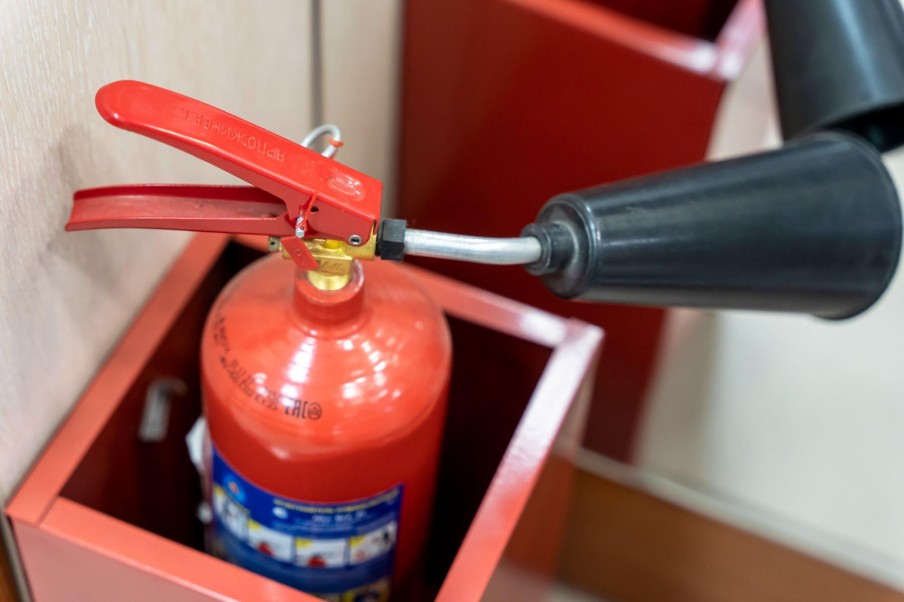

Key Highlights
- Dry powder extinguishers are highly versatile, capable of tackling wood, liquid, and gas fires.
- The ABC dry powder fire extinguisher is specifically rated for the three most common classes of fire.
- These devices work by creating a barrier between the fuel and the oxygen in the air.
- They are particularly effective in outdoor environments and large industrial workshops.
Introduction
Fire safety is a multifaceted discipline that requires the right tools for specific risks. Among the various types of safety equipment available, the dry powder fire extinguisher is perhaps the most widely recognised for its versatility. Often called multipurpose extinguishers, these units are found in diverse settings ranging from residential garages to massive industrial manufacturing plants. Choosing the correct extinguisher involves understanding the specific fire classes present in a building. While some extinguishers are limited to organic solids or flammable liquids, the ABC dry powder fire extinguisher offers protection, which makes it an ideal choice for locations where multiple risks overlap.
Versatility Across Multiple Fire Classes
The most significant advantage of this equipment is its multipurpose rating. Fires are categorised into classes based on the fuel source. Class A fires involve organic solids like paper, wood, and textiles. Class B fires involve flammable liquids such as petrol or oil, while Class C fires involve flammable gases like butane or methane. In many environments, such as a workshop or a home, all three of these risks might be present simultaneously, making it difficult to choose a specialised extinguisher for each.
The ABC dry powder fire extinguisher is designed to handle all three of these categories effectively. Because the powder is a chemical agent that does not rely on water, it can suppress liquid and gas fires that would be dangerous to tackle with aqueous-based systems. This versatility simplifies fire safety management for business owners, as they can install a unit that provides comprehensive coverage against fire threats they might encounter daily.
Rapid Knockdown of Flames
When a fire breaks out, every second counts, as the speed at which an extinguisher can suppress the visible flames is crucial for preventing the fire from reaching flashover. A dry powder fire extinguisher is renowned for its rapid knockdown capabilities. When the powder is discharged, it forms a dense cloud that quickly covers the burning area. This cloud acts almost instantly to interrupt the chemical reaction of the fire.
The powder works by smothering the fire and separating the fuel from the oxygen supply. Unlike some agents that require a cooling period to be effective, dry powder provides an immediate visual reduction in fire intensity. This rapid action is particularly beneficial in preventing the spread of fire in open spaces or ventilated areas where fire can travel quickly. For professionals working in high-risk environments, having an agent that acts this quickly provides a vital window of safety to evacuate or further secure the premises.
Creating a Protective Chemical Barrier
Beyond just extinguishing the active flames, dry powder has a unique way of preventing re-ignition. When the powder from an ABC dry powder fire extinguisher is sprayed onto a hot surface, it melts and fuses to form a sticky, crust-like layer. This is particularly important for Class A fires involving wood or paper. The melted powder seals the embers and prevents oxygen from reaching the hot fuel, effectively starving the fire and stopping it from starting up again.
This barrier effect is a key reason why powder is so effective for structural materials. While it can be messy to clean up, the priority in an emergency is ensuring the fire does not reignite after the initial suppression. The chemical coating provides a lasting shield that buys time for fire services to arrive and conduct a thorough inspection. This characteristic, combined with its electrical non-conductivity, makes it a robust and powerful tool for heavy-duty fire protection in diverse industrial settings.
Effective in Extreme Temperatures
Environmental conditions play a significant role in the reliability of fire safety equipment. Water-based or foam extinguishers can be susceptible to freezing in cold climates, which can cause the internal mechanisms to fail or the canister to burst. This makes them unsuitable for outdoor storage in unheated sheds, construction sites, or vehicles during the winter months. A dry powder fire extinguisher, however, is not affected by freezing temperatures.
The chemical powders used, such as monoammonium phosphate, remain stable and free-flowing even in sub-zero conditions. This makes them the preferred choice for external fire points and transport vehicles. Whether it is mounted on the side of a delivery lorry or kept in a remote warehouse, the powder remains ready for immediate use. This reliability across a wide temperature range ensures that no matter the season or the location, the fire protection remains consistent and dependable.
Conclusion
The versatility and power of the dry powder fire extinguisher make it one of the most effective tools in any fire safety arsenal. By providing a single solution for Class A, B, and C fires, it offers a level of convenience and security that is hard to match. While users must be mindful of the cleanup required after use, the rapid knockdown and re-ignition prevention it offers are invaluable in an emergency. Whether for a vehicle, a workshop, or a commercial warehouse, these extinguishers provide reliable protection against the unpredictable nature of fire.
Get in touch with Brave Fire to upgrade your building’s safety equipment with a high-performance ABC dry powder fire extinguisher.